
Brandon Henes · Applied AI for business operations

Your business data.
Ready for decisions.

I build applications that bring business records, AI-assisted analysis, and next steps into one working process.

For owners and team leaders who spend too much time assembling reports and figuring out what needs attention.

Brandon Henes, founder of Henes Automation Studio
You'll work directly with me.Brandon Henes
Founder, Henes Automation Studio

Business records
Bring scattered information into a usable structure

Analysis with context
Calculate the measures. Prepare the review.

Work that follows
Keep decisions, owners, and next actions connected

Applications I've built

Built around
real operating questions

Explore the actual interfaces, where AI helps, and the decisions behind the software.

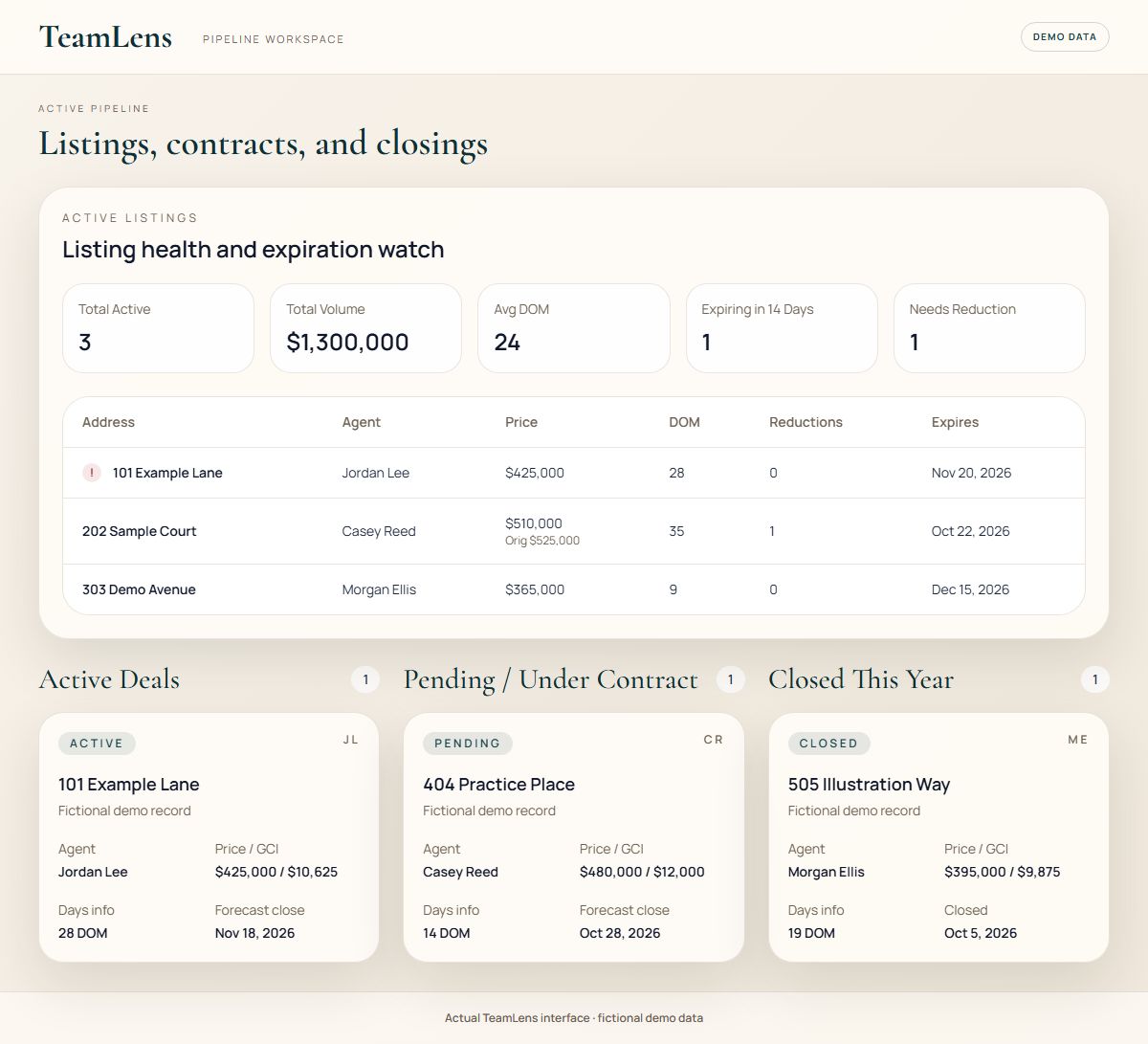
Actual TeamLens pipeline interface with fictional listings, listing health flags, and active, pending, and closed deal columns
Actual TeamLens interface, shown with fictional demo data.

01 / TeamLens

What changed?
What needs attention?

I built TeamLens to bring transaction records, pipeline performance, AI-assisted coaching, and action tracking into one real-estate team workspace.

The numbers are calculated in code. AI uses that business context to prepare coaching notes and suggested priorities. The team leader reviews the interpretation and decides what happens next.

Explore the application and source

Independent application · Imports, performance analysis & AI-assisted preparation

  1. 01

    Prepare the records

    AI suggests column mappings. Validation and duplicate checks support repeatable imports.

  2. 02

    Prepare the review

    Calculated measures and relevant transactions give the AI useful business context.

  3. 03

    Track the decisions

    Action items have visible status and completion times.

02 / AI Client Engine

Keep the review
connected to the action.

I built a workflow for research, reviewed messages, and follow-up. Its release controls check the exact draft and recipient before a message can be released.

Try one of its actual rules: change an approved draft and the previous approval no longer clears it.

Explore the build and its source

Independent application · The example uses fictional inputs and sends nothing.

Try changing the approved message

Example messageVersion 1
Subject

A workflow outline for your team

Approval checkRuns as you edit

Approval matches

Version 1 and its recipient match the approval record.

Current draft
Version 1
Approved draft
Version 1
Approved recipient
Alex Example

Start with “Make a sample edit,” or type directly in the message.

Fictional data. Nothing is sent, uploaded, or saved after reload.

Also built

Family Journal

Private application

A web and Android application for capturing and finding memories, with AI-assisted captions, search, and durable media uploads. The journal and its contents stay private.

AI-assisted business review

A useful review.
From your own records.

If your team rebuilds the same report every week, we can turn that work into a repeatable process: agreed measures, a prepared brief, and actions your team can track.

Discuss your business review

What we would build together

A repeatable weekly or monthly review: agreed numbers, a brief explaining what needs attention, and an action list with owners.

  • Repeatable preparation of the agreed data, with checks for missing or duplicate records
  • Defined calculations and a clear view of what changed or needs attention
  • An AI-assisted brief grounded in that information, with a review step before decisions are acted on
  • A place to record actions, owners, and completion
  • A tested working process, handover, and an agreed support plan

Scope and fixed fee agreed before work starts. We review a representative example first, then specify the inputs, output, acceptance checks, timing, software costs, and support. Adapting this approach to your business is a custom engagement.

Working together

Start with a decision
your team makes often

We define the useful output before choosing the tools. Existing software may already cover part or all of the work.

  1. 01

    Walk through the current review

    Show me how the information is assembled, which questions the team asks, and what happens after the meeting.

  2. 02

    Agree on the output and scope

    We examine a representative sample, define the measures and review steps, and agree on a written scope, fixed quote, and delivery plan.

  3. 03

    Build, check, and hand over

    We compare the output with source records, test missing data and exceptions, and measure preparation time against the starting process.

Operations experience. Hands-on implementation.

Understand the work.
Build what it needs.

I'm Brandon. My background is in operations, where the numbers need to make sense and the next action needs an owner.

I work across application development, business data, AI integration, testing, and handover. The applications above show how I approach that work, from preparing records to supporting a decision.

More about my background

Before we talk

A few practical
questions

Who is this useful for?

Owners and team leaders who repeat the same review of business activity, assemble it manually, and need a clearer connection between the information and the work that follows. We confirm the value and data availability before proposing a build.

Why not use the AI or reports in my current software?

That may be the right answer. We check existing features first. Custom work is useful when your review still needs business-specific data preparation, calculations, context, or action tracking that those features do not cover.

What does the project cost?

You receive a fixed quote after we review the process and a representative sample of the records. The proposal sets out the output, integrations, acceptance checks, timeline, software costs, and any ongoing support.

What does AI do, and what do people review?

AI can help map incoming information and prepare explanations or suggested priorities. Agreed calculations and data checks support the output. We define what needs human review, what actions are permitted, and how uncertainty or missing information is surfaced.

Are the applications shown client case studies?

They are independent applications I designed and built. The TeamLens image shows its actual interface with fictional records. The AI Client Engine example exercises an actual release rule. They demonstrate my implementation approach; they do not claim paid-client outcomes.

How will we know the work helped?

We establish a baseline for time spent preparing the review, verify agreed measures against the source records, and check whether the team can use the output and track its next actions. The success criteria belong in the scope before building begins.

Bring a recurring business question

What does your team
piece together each week?

Tell me what you review, where the information lives, and what the team needs to decide or do with it. I'll follow up about fit and a sensible next step.

Your inquiry comes directly to me.

brandonhenes@gmail.com

Prefer a conversation?

Choose a time to talk

Having trouble with the form? Open it in a new tab or email Brandon.