Calculate first, then explain
Financial summaries and agent benchmarks are calculated in TypeScript from stored records. AI receives that context to prepare narrative and suggestions, keeping the underlying calculations inspectable.
Selected work / TeamLens
A real-estate team application that connects business data, performance review, coaching preparation, and follow-up work in one workspace.
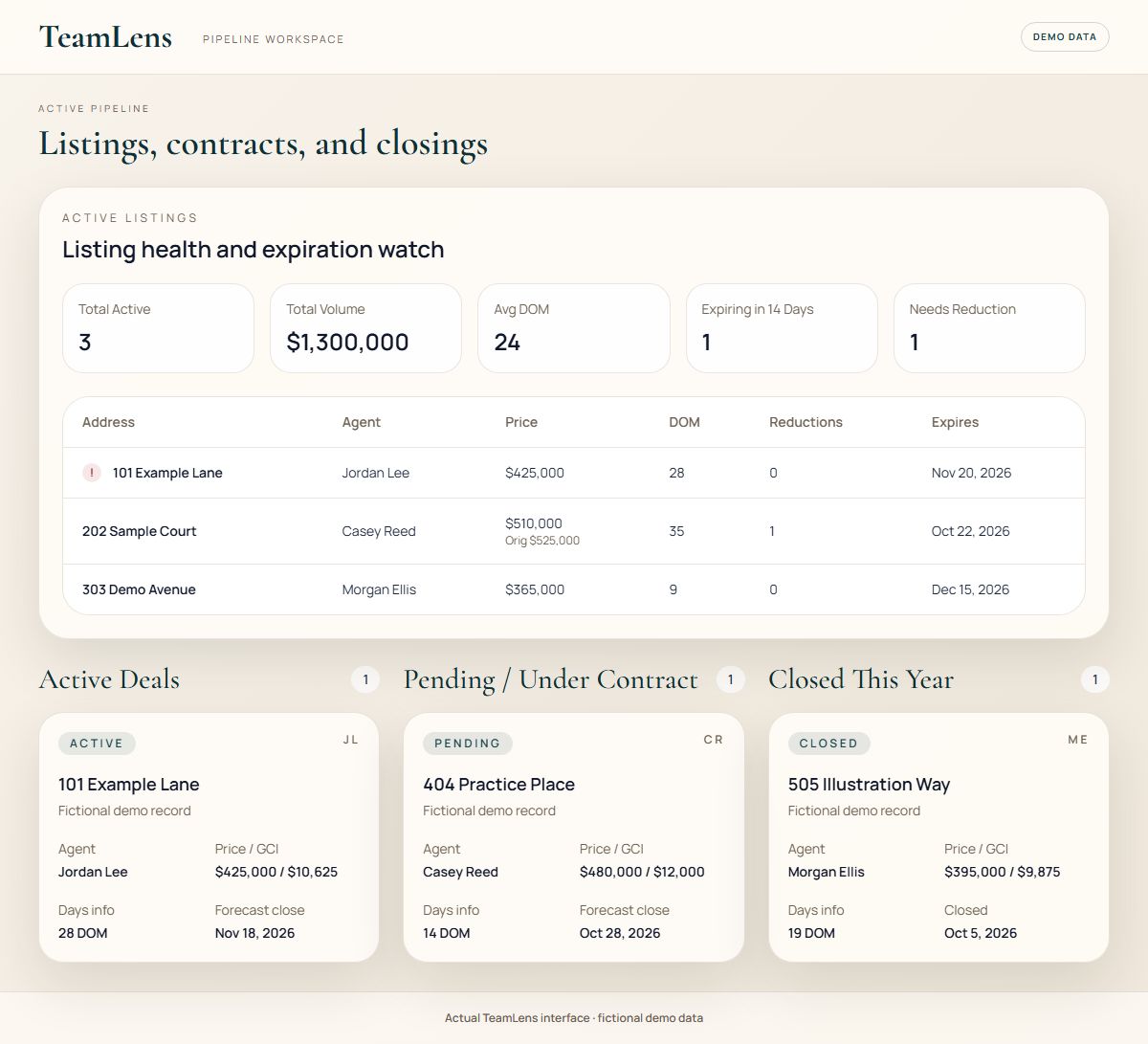
The business problem
A team leader needs to understand closed business, the current pipeline, progress toward goals, and which agents need attention. Answering those questions can involve exports, spreadsheets, and a separate list of follow-up tasks.
I built TeamLens around that recurring management workflow: bring records together, calculate a useful view, prepare a conversation, and keep track of the resulting actions.
How the system works
Each stage has a defined job. Structured data supports the review; the team leader decides what to do with it.
Map transaction CSV columns, normalize the records, and check for duplicates.
Bring closed business, pipeline, goals, and agent benchmarks into a management view.
Use that business context to prepare coaching notes and suggested priorities.
Track action items through pending and completed states, with completion times.
Inside the build
Financial summaries and agent benchmarks are calculated in TypeScript from stored records. AI receives that context to prepare narrative and suggestions, keeping the underlying calculations inspectable.
The import process checks transaction fingerprints against existing records and the current batch. It reports imported and skipped rows, so a repeated export can be handled deliberately.
Prioritized action items have their own status and completion time. The workflow continues beyond a dashboard into work a team leader can review and track.
Built with
Apply the same thinking
Start with the export, spreadsheet, or handoff your team already uses. We can define one useful output and the review step that makes it part of the working week.